Signs your restaurant's grease trap needs cleaning
What odours, slow drains and backups can mean, and how to decide the next step.
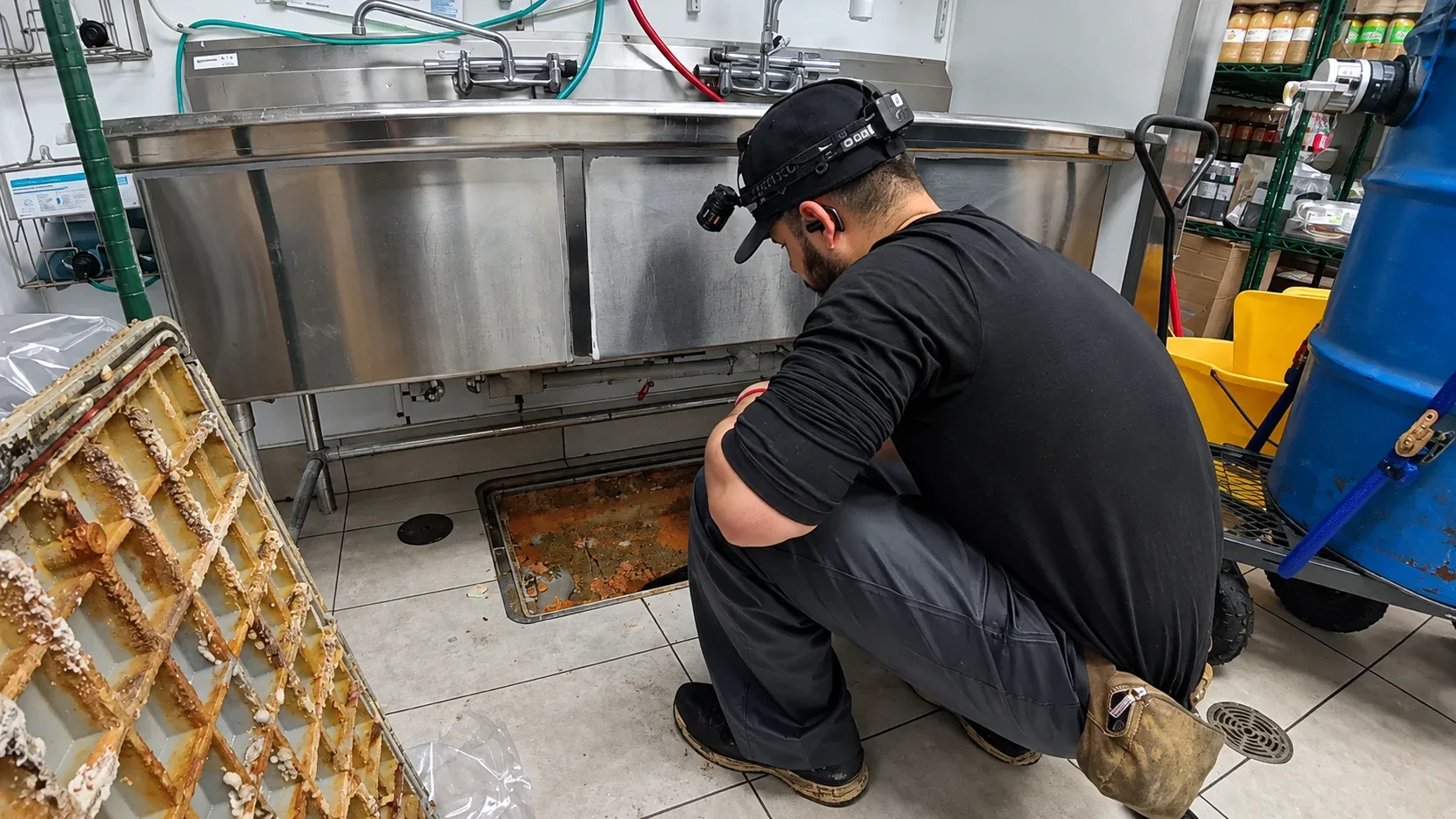
A grease trap is easy to ignore between problems, but the cheapest service is usually the planned kind. This guide explains how trap cleaning, maintenance and repair fit together, what a manager can reasonably do, and how to keep it all on a schedule instead of chasing symptoms.
A trap's job is to intercept grease and solids so they do not travel down the drain line. Grease slowly accumulates in the unit, and everything behind that goes through the water your kitchen drains: flow rate, odours, and how much material ends up somewhere it should not be.
Maintenance is the habit of keeping the trap serviceable: emptying and cleaning it at a workable rhythm, checking that it can still be opened and drained properly, and recording what each visit found.
The distinction matters when symptoms persist: if a drain is still slow after the trap has been serviced, the cause may be outside the trap entirely.
You do not need to open the trap — that is the provider's work. What management controls is the schedule and the records:
A free-format log is enough. For every visit, record: the date, the service performed (cleaning, condition check or repair follow-up), the observations reported by the provider, and the next step — usually the agreed interval. Records turn a vague "it smells sometimes" into a trackable pattern and make the interval decision a data question rather than an argument.
The right interval depends on the trap size and type, how much grease the kitchen sends into it, how the drain line behaves and any local requirements that apply to the premises — your authority having jurisdiction sets any site-specific obligation. A provider who sees what a visit finds can recommend an interval from observation instead of guesswork; the interval then gets revised as usage changes.
None of this is a claim about legally required cleaning frequencies for any particular kitchen.
Odours, slow drainage or backups are not always dirty-trap symptoms — but they are always worth acting on. Grease Shields cleans and maintains commercial grease traps in St. John's and across the Island of Newfoundland, with repair support where the issue involves the trap or its accessible components. See the grease trap cleaning and maintenance service or request a quote. For the symptom side of that decision, read signs your restaurant's grease trap needs cleaning.