Commercial Grease Trap Cleaning in St. John's, NL
Grease trap cleaning, visual condition checks and maintenance for restaurants and food-service kitchens across the Island of Newfoundland, with St. John's and surrounding communities as the primary local focus.
Grease Shields provides commercial grease trap cleaning for restaurants and other food-service kitchens across the Island of Newfoundland, with St. John's and surrounding communities as our primary local service area. Service includes removal of accumulated grease and waste, cleaning of accessible trap components, visual condition checks and maintenance based on what we find.
Grease traps vary in size, design and access. We confirm the trap location, access and scope before work begins so you know what will be cleaned and what will be checked.
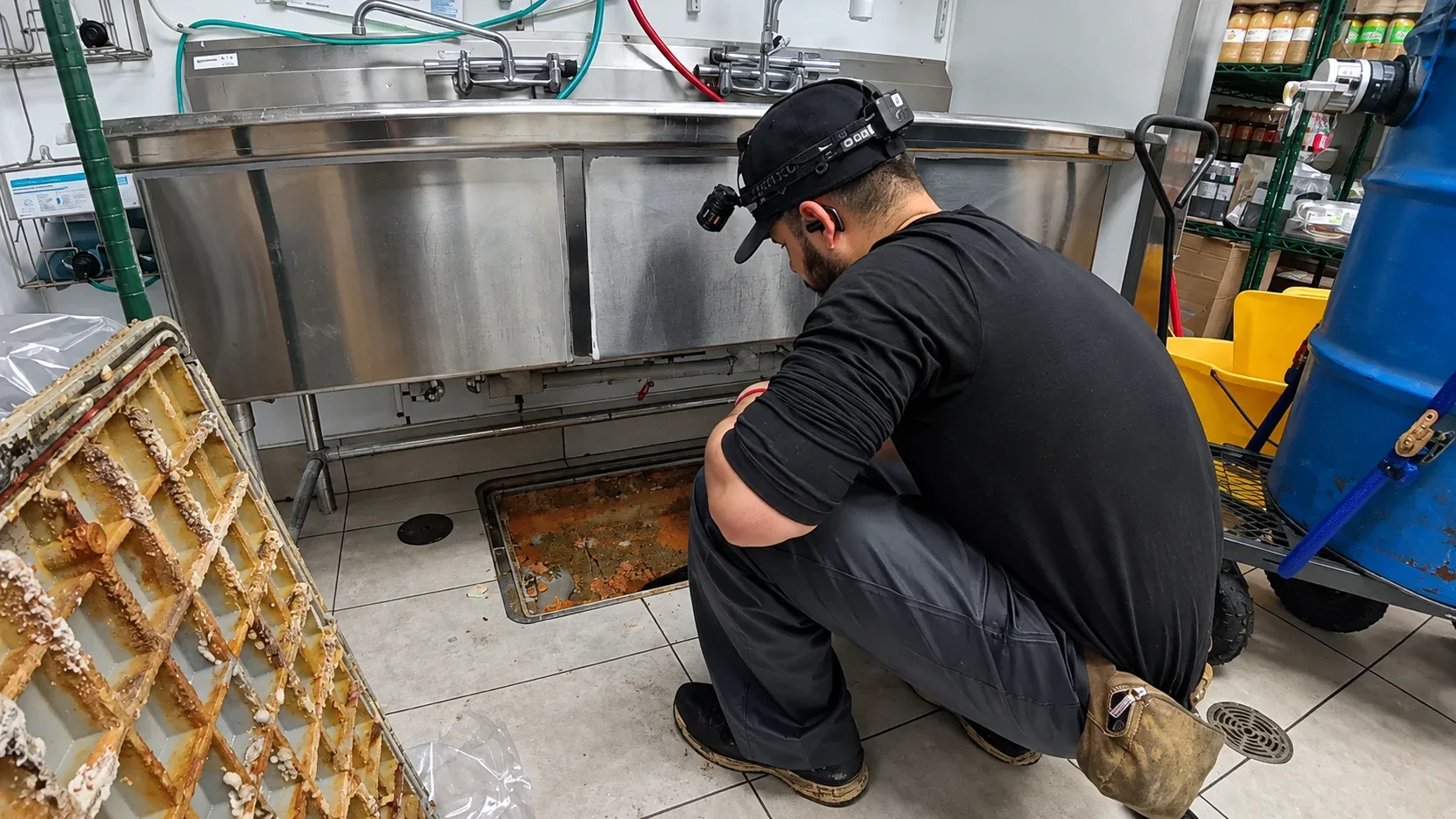
Cleaning and repair are different services. Removing grease and waste does not automatically fix damaged baffles, a cracked tank or a plumbing problem elsewhere in the line.
What the service includes
The exact work depends on the trap type, its condition and how it can be accessed. A typical visit covers the items below.
- Removal of accumulated grease and waste. Grease, solids and wastewater are removed as appropriate for the trap.
- Cleaning of accessible components. Accessible interior surfaces, baffles and other components within the confirmed scope are cleaned.
- Visual check. We look for obvious condition issues, blockages and access problems while the trap is open.
- Reassembly and review. Accessible components are put back in place and the completed work is reviewed with you.
- Service documentation. You receive a record of the work for your maintenance file.
Warning signs that a trap may need attention
Grease traps can accumulate material without obvious symptoms at first. These signs are a reason to arrange an assessment, but none of them confirms a single cause on its own.
- Persistent odours near the trap, drains or kitchen floor.
- Slow drainage in sinks or floor drains connected to the trap.
- Backups or wastewater rising where it should not.
- Visible grease around the trap, lid or surrounding floor.
- Gurgling sounds when water drains.
- A trap that has gone longer than usual without service.
For a closer look at these symptoms, read signs your restaurant's grease trap needs cleaning.
Cleaning versus plumbing repair
Cleaning addresses the grease and waste that have collected in the trap. It does not replace a plumbing repair when the cause of a problem is elsewhere in the drain line, venting system or building plumbing. If the symptoms continue after cleaning, the next step may be a plumbing assessment.
Repair and maintenance
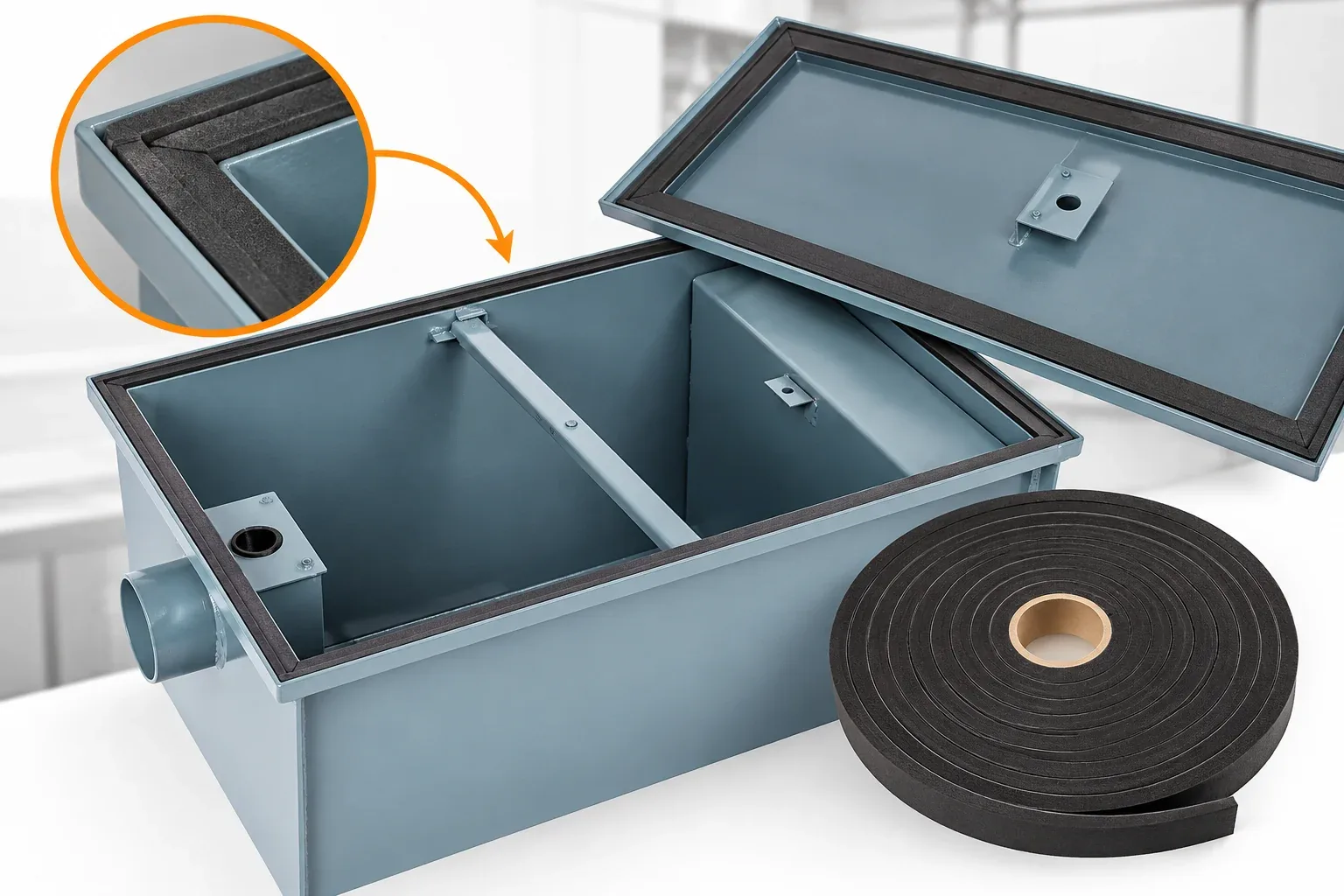
We also support grease trap repair and maintenance where the issue involves the trap or its accessible components. If a baffle is damaged, a lid or fitting is failing, or another trap component needs attention, we can assess the problem and discuss repair options.
Not every drainage problem starts at the trap. A blockage farther down the line, a venting issue or a plumbing fault may need a licensed plumber. We will explain what we find and tell you when the next step is outside the scope of trap cleaning or repair.
Routine maintenance and condition checks
Routine maintenance for a grease trap usually combines recurring cleaning visits, accessibility checks and a review of what we observe each time the trap is opened. Recurring service is planned around the trap and how the kitchen uses it — there is no single interval that fits every site, and the schedule can be revisited as cooking volume changes.
- Recurring cleaning visits. The same removal and cleaning scope, scheduled so grease and waste do not accumulate past the point where cleaning is difficult.
- Accessibility checks. Confirming the trap can still be opened, drained and serviced without difficulty.
- Condition findings. We document what we find — damaged baffles, loose fittings, wear or anything unexpected — and discuss the options with you. Repairs are discussed and agreed before any repair work is done.
- Scheduling review. As usage changes, the interval may need adjusting; regular service makes that an easy decision rather than an emergency.
Routine cleaning and maintenance are different from a plumbing repair: cleaning keeps material out of the trap, while a fault elsewhere in the line or venting needs a different fix. Read our maintenance guide for restaurant managers for how the pieces fit together. For component-level guidance, read our articles on grease trap lid gaskets, internal baffles and trap cleaning vs. pipe snaking.
Waste handling
Removed grease and waste are collected as part of the service. Arrangements vary by site and location, so ask us to confirm the disposal process for your property when you request a quote.
Maintenance records
Keep a record of each cleaning, including the date, work performed, visible observations and recommendations. Records help you spot recurring problems and plan the next service. We provide service documentation after the visit.
Service area
We serve the Island of Newfoundland, with St. John's, Mount Pearl, Paradise and Conception Bay South as our primary local area. Availability depends on the location, the service requested, the schedule and any travel arrangements. See the service area page or contact us to confirm the visit details for your site.
See a real Grease Shields grease trap result

Filmed by Grease Shields: grease trap cleaning in St. John's and surrounding areas. Results depend on the trap, condition and scope.
Watch on YouTube: Grease Shields - Grease Trap Cleaning
Questions about grease trap service
How often should a grease trap be cleaned?
The right interval depends on the trap size, the volume and type of cooking, how much grease enters the system and any local requirements. Warning signs and past service records can help guide the decision. Confirm any site-specific requirement with your authority having jurisdiction.
Will cleaning fix a slow drain?
Sometimes. Cleaning removes grease and waste from the trap, but a slow drain can also be caused by a blockage farther down the line, a venting problem or damaged plumbing. If the problem continues after cleaning, a plumbing assessment may be needed.
Do you repair grease traps?
We support grease trap repair and maintenance where the issue involves the trap or its accessible components. We will assess the problem and explain what we find. Work outside that scope, including some plumbing faults, may need a licensed plumber.
What happens to the removed grease and waste?
Removed material is collected as part of the service. Disposal arrangements vary by site and location, so ask us to confirm the process for your property when you request a quote.
Is cleaning a compliance guarantee?
No. Cleaning and the associated service record support your maintenance program, but they are not a guarantee of legal compliance, a plumbing fix or acceptance by an authority having jurisdiction. Confirm your specific obligations with the appropriate authority.
Do you offer recurring trap service?
Yes. We can set up recurring cleaning and condition-check visits based on your trap and how the kitchen operates. Availability is confirmed when you contact us, and the schedule can be reviewed as usage changes.