A practical maintenance checklist for commercial kitchen hoods
What staff can monitor between visits, and how to keep records that make the schedule work.
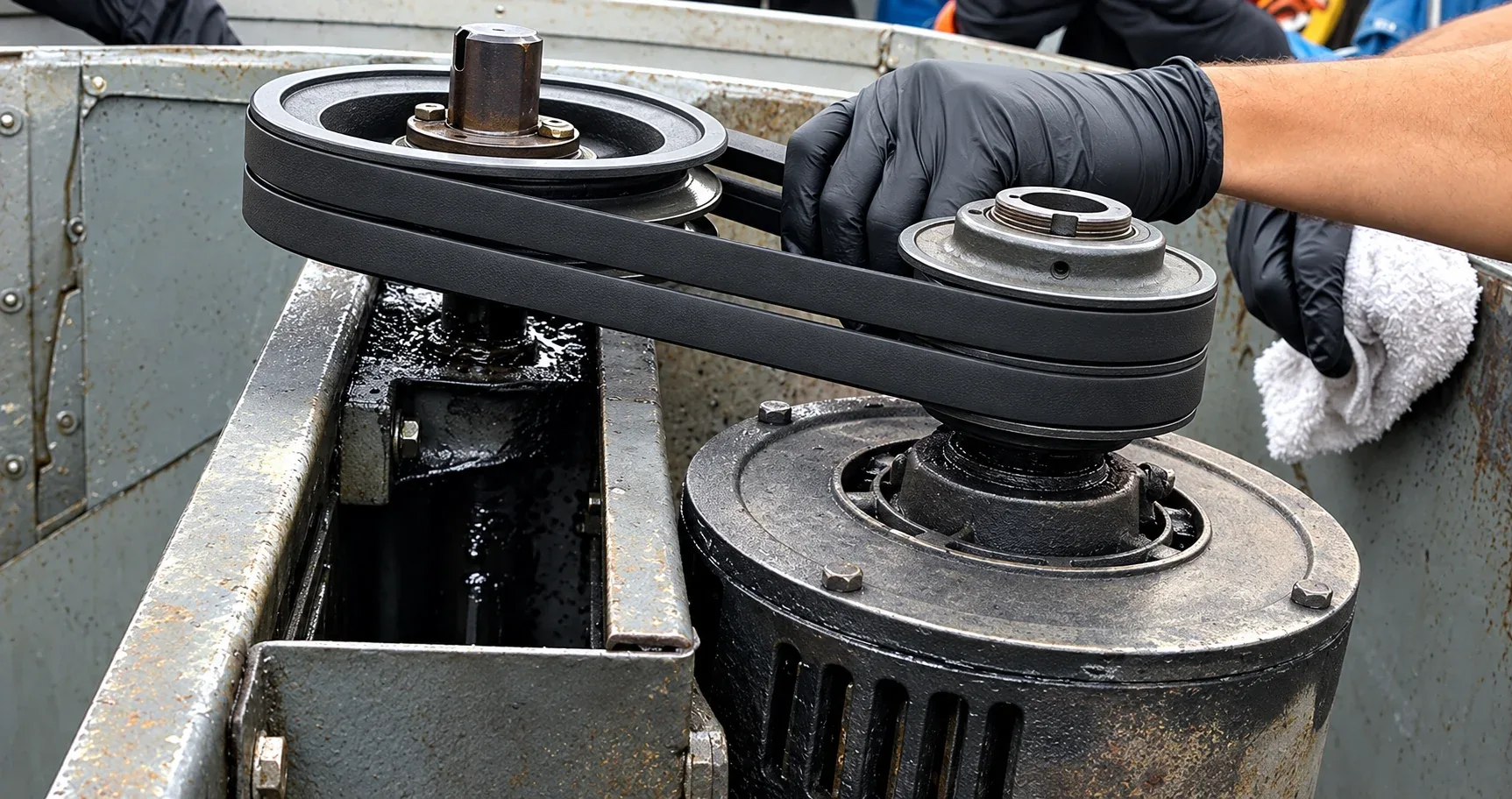
An exhaust fan belt is a wear item, not a permanent part. On a belt-driven commercial kitchen exhaust fan, the belt transfers power from the motor to the fan wheel. When it wears, slips or breaks, airflow can drop, the fan can become noisy, and the kitchen may not vent as it should. The belt is also only one part of the system. Reduced airflow, noise and vibration can come from grease buildup, filters, duct restrictions, motor or bearing problems, or controls.
Safety matters here. Work on rooftop fans, moving machinery or electrical components should be done by appropriately qualified personnel using the required procedures. This article explains what to watch for and when to arrange service; it does not provide instructions for accessing or adjusting the equipment.
Many commercial kitchen exhaust fans are belt-driven. A motor turns a pulley, the belt runs over that pulley and a second pulley on the fan shaft, and the fan wheel moves air. Other fans are direct-drive, with the motor connected directly to the fan wheel and no belt. The design depends on the equipment.
Belt type, pulley size, tension and alignment are specific to the fan. The manufacturer's manual and the fan nameplate are the reference, not a generic parts list. A belt that fits one fan may not be correct for another.
Belts operate under load, heat and vibration. Over time, the material can crack, glaze, stretch or fray. Grease and oil contamination can affect the belt and pulleys. Incorrect tension can accelerate wear: too loose and the belt slips; too tight and it loads the bearings and motor. Misalignment or worn pulleys can wear one edge of the belt. Age and repeated cycling also matter.
A belt that fails may be the first visible symptom of a pulley, bearing or alignment problem, so replacing the belt without checking the drive is not always the end of the story.
Signs that a belt-driven fan needs attention include:
Some of these signs can only be seen or heard with access to the fan. Kitchen staff should not climb onto a roof, open fan guards or reach into moving equipment to check a belt.
Airflow problems have several possible causes. Clogged grease filters, grease buildup in the hood, duct or fan, a closed or failed damper, make-up air imbalance, duct leakage, a damaged fan wheel, a failing motor or bearing, or a control problem can all reduce performance. A belt can look intact and still be slipping. A broken belt may stop the fan, but a fan that runs slowly or noisily may have a different fault. The right approach is a proper assessment by a qualified technician, not a guess based on one symptom.
Hood and exhaust cleaning removes grease from the components in the confirmed scope: hood and canopy surfaces, filters, accessible fan components and accessible exhaust areas. That work matters, because grease buildup can affect airflow and is a fire load. It is not a mechanical repair.
Cleaning does not replace a worn belt, tension a belt, align pulleys, replace bearings, repair a motor or fix electrical controls. If a belt is damaged or the drive is misaligned, cleaning alone will not correct it. Grease Shields provides hood, canopy and accessible exhaust cleaning and maintenance in St. John's and across the Island of Newfoundland. Mechanical work on fans and belts should be carried out by a qualified exhaust-system technician within the scope they confirm.
Belt tension and alignment are not guesswork. Too little tension allows slip, heat and wear. Too much tension can damage bearings and the motor. Misalignment wears the belt and pulleys and can cause vibration. The correct settings come from the equipment manufacturer.
The replacement belt must match the profile, length and rating specified for the drive. A technician should also inspect the pulleys, bearings and shaft for wear or damage before fitting a new belt. If a belt keeps failing, the cause may be the drive rather than the belt.
Contact a qualified exhaust-system technician if you see or hear any of the warning signs, if the belt is broken or missing, if the fan will not turn, or if airflow has dropped noticeably. Also arrange scheduled maintenance according to the manufacturer's instructions.
Do not attempt to access rooftop equipment, remove guards, adjust tension, work near moving machinery or open electrical enclosures. Those tasks require training, lockout/tagout, fall protection and other controls. A kitchen manager's role is to notice changes, keep filters clean where staff are trained to do so, preserve service records and arrange the right trade.
Manufacturer guidance and occupational safety resources both point to scheduled inspection and controlled access. See CaptiveAire's maintenance guide for an example of belt and fan maintenance guidance, and the Canadian Centre for Occupational Health and Safety's safeguarding guidance for the hazards of working around machinery.
Manufacturer guidance for rooftop exhaust equipment commonly includes checking belts for slippage and maintaining belts, motors and electrical connections on a schedule. The exact tasks and intervals depend on the fan, its duty cycle and the environment. Keep a record of belt inspections and replacements, note any noise or airflow complaints, and share the equipment model with the technician.
If cleaning and mechanical maintenance are due around the same time, they can sometimes be coordinated, but confirm the scope with each provider. A cleaning visit should not be described as a belt service unless the belt work is explicitly included.
Belt tensioning requires access to the fan, the correct specification and an understanding of the drive. Rooftop access, moving parts and electrical hazards make this work unsuitable for kitchen staff. Use a qualified technician.
There is no universal life. Heat, load, alignment, tension, contamination and running hours all affect wear. Inspect the belt on the manufacturer's schedule and replace it when condition requires, not simply by age.
A standard hood and exhaust cleaning visit focuses on grease removal from the components in scope. Belt inspection, tensioning or replacement is mechanical work and may be a separate service. Ask before booking if you need both.
If your kitchen is in St. John's or elsewhere on the Island of Newfoundland and you are planning hood cleaning or maintenance, Grease Shields can confirm the cleaning scope for your system. See the hood and canopy cleaning service or request a quote. For the between-visit checks your team can do safely, read our hood maintenance checklist. If the issue is airflow or mechanical noise, arrange a qualified exhaust-system technician.