Grease trap lid gaskets: signs of failure and replacement
How the lid seal works and what to check when odours or seepage appear.
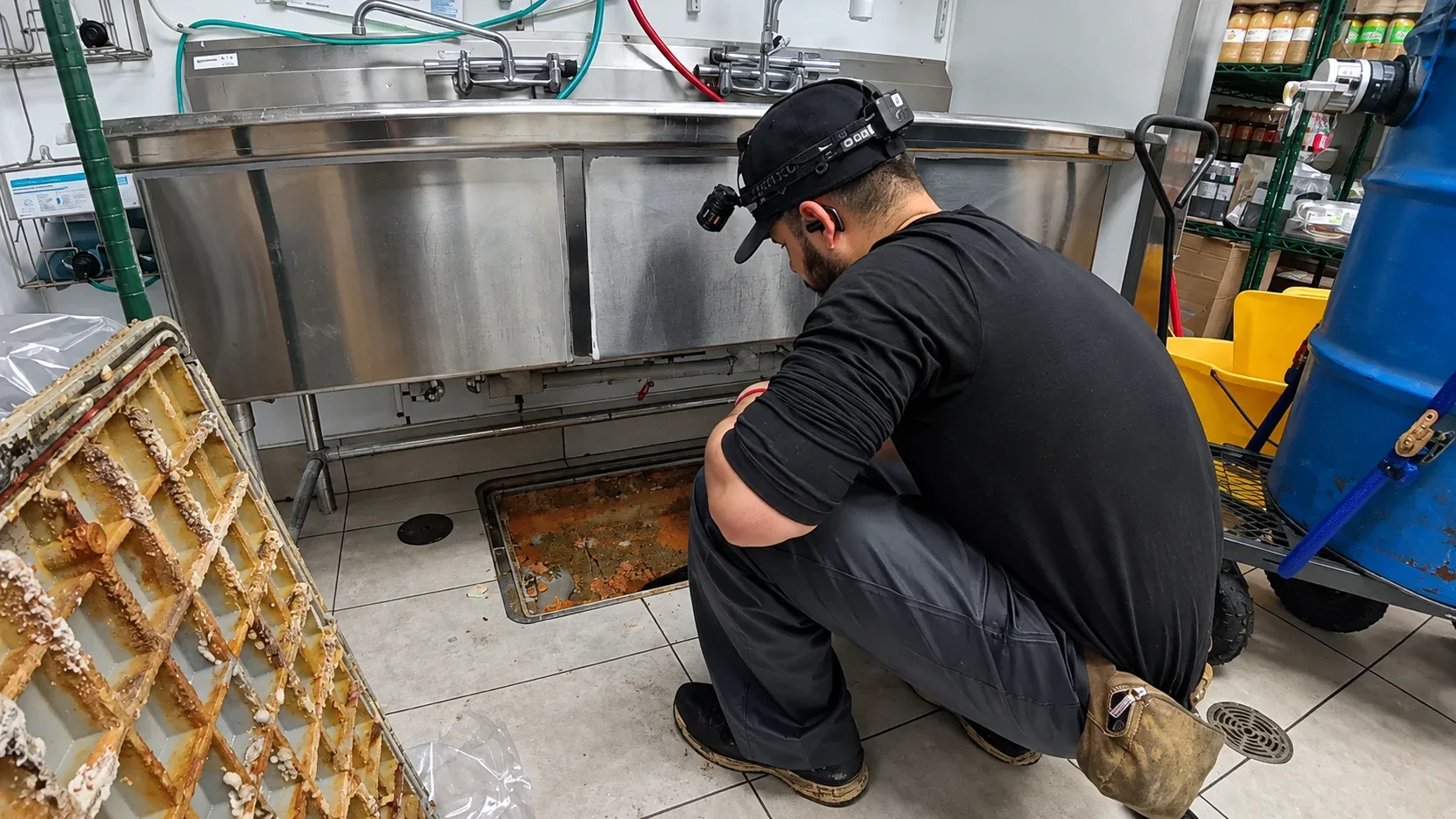
Grease trap baffles are internal components that help control how wastewater moves through the trap. They can support grease separation by slowing flow, directing water along the intended path and reducing short-circuiting. When a baffle is missing, damaged, displaced or incorrectly reinstalled, some systems may not perform as designed. But baffles are not the only possible cause of a grease trap problem, and not every trap has the same internal layout.
A baffle is a partition, plate, deflector or similar component inside a grease trap or interceptor. Depending on the design, a trap may have an inlet baffle, an outlet baffle, a dip tube, a screen, a flow-control device or other internal parts. Some baffles are fixed; some are removable for cleaning. Some traps have multiple chambers; others have a simpler layout.
The terminology and arrangement vary by manufacturer and model. The parts list and installation instructions for the specific trap are the reference. A component that fits one unit may not be correct for another.
Grease traps rely on retention time and calm conditions. Grease floats, solids settle, and the wastewater in between moves toward the outlet. Baffles can help direct incoming flow, reduce turbulence, keep the floating grease layer away from the outlet and give solids a better chance to settle.
They do not create separation on their own. Trap size, flow rate, temperature, cleaning frequency and the amount of grease and solids entering the unit all affect performance. A baffle that is damaged or missing can reduce the trap's ability to do its job, but it is one part of a system.
Not every grease trap has identical internal components. A small under-sink hydromechanical interceptor may have a different arrangement from a large in-ground gravity interceptor. Some units use removable baffles and screens; others use fixed partitions. The number, position and shape of the components are specific to the model.
That matters when parts are inspected, cleaned or replaced. A part that fits one trap may not fit another, and a modification that looks reasonable may not match the design.
Problems with baffles and related components can include:
These problems can contribute to odours, slow drainage, backups or grease passing downstream. They can also be present without obvious symptoms. The only way to know is to inspect the accessible components during service.
During a grease trap cleaning, a technician can inspect the accessible internal components while the trap is open. The check may include:
The findings should be recorded. If a component is damaged or missing, the technician should explain it and discuss the next step. Some traps are in pits or below grade, where confined-space procedures apply; inspection and work should be done by trained personnel.
Municipal maintenance guides commonly instruct service providers to remove baffles and screens for cleaning, inspect them for damage and reassemble the trap correctly. The Metro Vancouver cleaning guide and the City of Calgary maintenance guide are useful examples.
A baffle issue is one possible cause of poor performance. A full trap, a blocked downstream pipe, a venting problem, a damaged lid or gasket, a failing fitting, a root intrusion or a pipe that has settled can produce similar symptoms.
Cleaning may restore flow if a baffle is simply blocked with grease. It will not restore a baffle that is broken or missing, and it will not clear a blockage farther down the line. That is why the symptom should be assessed rather than assigned to one component.
Cleaning removes grease, solids and residue from the trap and accessible components. It can clear a blocked screen or baffle, allow a proper inspection and confirm that removable parts are back in place. It cannot repair a cracked or warped baffle, replace a missing part or correct a design or installation problem.
If a component needs replacement, the part should match the trap model and be installed correctly. A generic piece of metal or plastic cut to fit is not a suitable substitute for an engineered component. Grease Shields cleans and maintains commercial grease traps and can assess accessible components during service. Where a repair involves the trap or its accessible components, we can discuss the options within the support we offer; if the work is outside that scope, we will explain and refer you to the appropriate trade.
Arrange a professional assessment if:
Replacement or repair should be based on the specific model and the condition found. Do not open a below-grade trap or enter a pit yourself. Do not cut, bend or modify internal components to make them fit.
Follow the manufacturer's instructions for the trap and the maintenance requirements that apply to your site. Keep a record of each cleaning, the components inspected and any findings. Ask the service provider to check baffles, screens, the lid and gasket during each visit and to note anything that needs follow-up.
The right interval depends on the trap, the kitchen's grease load and local requirements. If the trap's performance changes, review the schedule and arrange an assessment rather than waiting for a backup.
No. The internal design varies. Many traps have baffles or similar flow-directing components, but the number, type and arrangement depend on the model. Use the manufacturer's information for the specific unit.
A missing baffle can affect how the trap performs and may allow more grease to pass downstream. It should be assessed and replaced with the correct part rather than left out.
No. Cleaning can remove buildup and reveal the damage, but it cannot repair or replace a broken component. That is a separate repair decision.
If your restaurant is in St. John's or elsewhere on the Island of Newfoundland and you have noticed recurring trap problems, Grease Shields can inspect the trap during a cleaning visit and document accessible component condition. See the grease trap cleaning and maintenance service, the repair and maintenance support, or request a quote. For the sealing side of the lid, read our guide to lid gaskets. For the difference between trap cleaning and drain clearing, read grease trap cleaning vs. pipe snaking.